How to Use Alligator Clips by Artc in Art
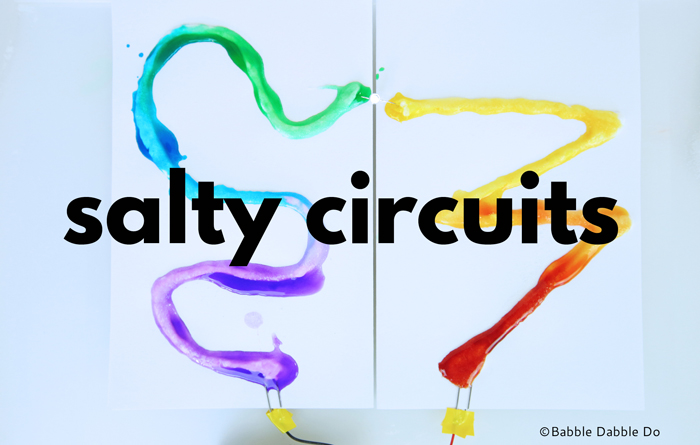
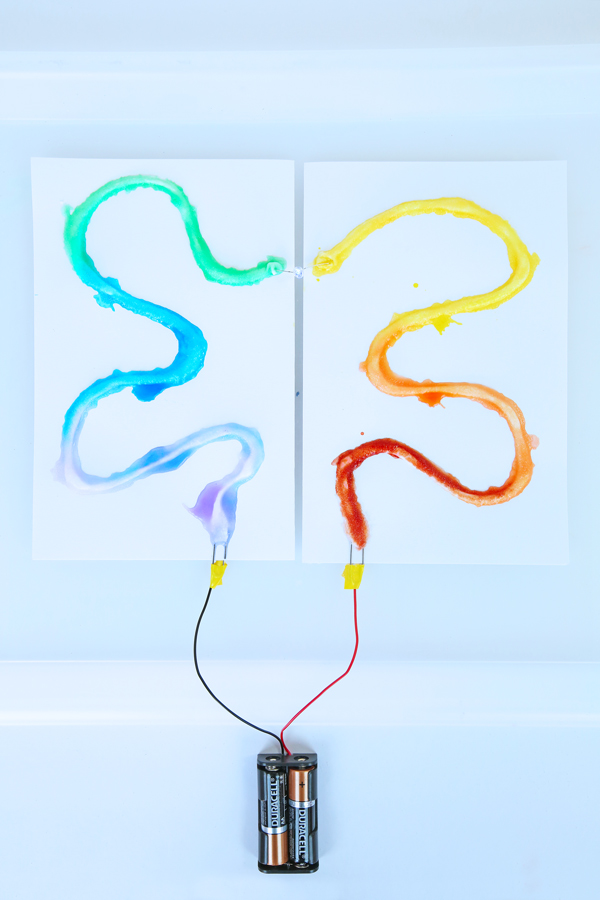
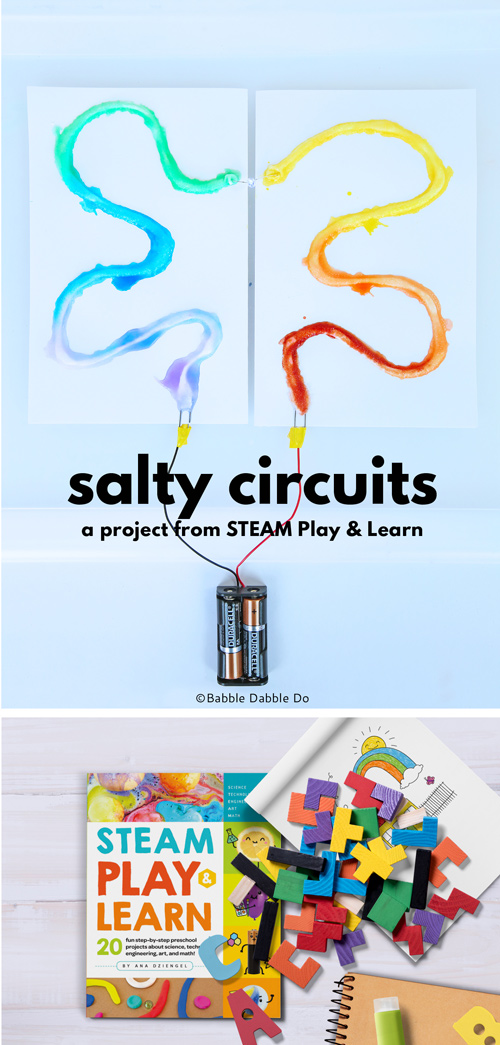
This simple circuit project is a fun way to introduce kids to electricity and how it moves from a battery through a circuit to ability an LED. Psst….it would make a nifty scientific discipline off-white project!
I of the nearly intriguing and mysterious scientific miracle is electricity. Electricity is the flow of electrons from a power source through a conductor to something needing ability (lights, machines, devices). Current is the flow of electrons in a circuit. At that place are two types of current: Direct Current (DC) and Alternating Current (AC). Batteries use DC current which is the type of current we will be discussing in this projection. In a DC circuit, electrons can only flow in one management which is why nosotros accept a negative and positive side to wiring and batteries.
Think of the flow of electricity in a DC current like a line for your favorite amusement park ride. You and the other people waiting are the electrons. You tin only motion in one direction to enter and go along the ride. If you want to repeat the adventure you have to start all over once again at the stop of the line. This is a great identify to read more almost the science behind electrical electric current.
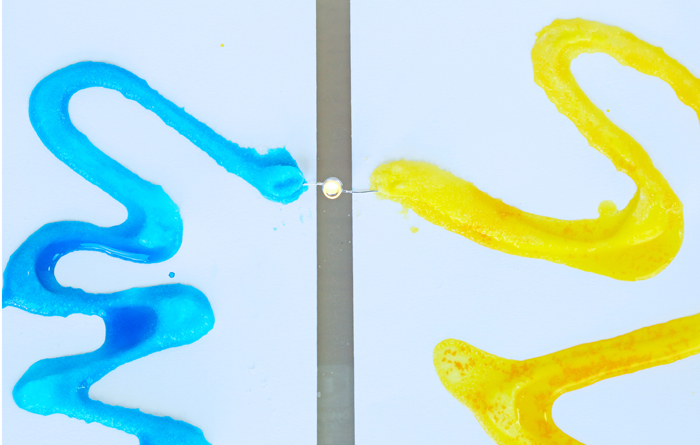
In this project we are going to explore how electricity moves from a battery (the ability source) through a conductor (salt and water) to an LED and back again to the battery to close the loop.
If you are a teacher and would similar to try this in the classroom be certain to bank check out our Salty Circuits in the Classroom section here.
This postal service contains affiliate links.
Salty Circuits is a project from my book STEAM Play & Learn.STEAM Play & Learn is geared towards preschoolers but many of the projects especially this i and the other electronics project in the volume, are suitable for kids of all ages. You can check out my book on Amazon hither:
[click_to_tweet tweet="Create a simple circuit using…salt?" quote="Create a simple circuit using…salt?"]
SAFTEY Notation: LED'south take pointed leads which tin can be sharp. Always supervise children when using batteries.
Salty Circuits: A Uncomplicated Circuit Projection
Materials
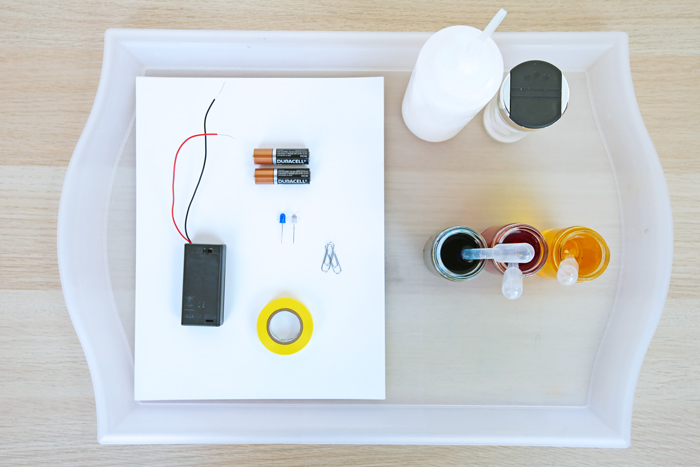
- Salt
- Glue
- Battery pack with AA batteries
- LEDs
- (2) sheets of Cardstock or thick paper
- Paper clips
- Electric Tape
- Tray
- Watercolors or Food coloring
- Pipettes or paint brushes
Instructions
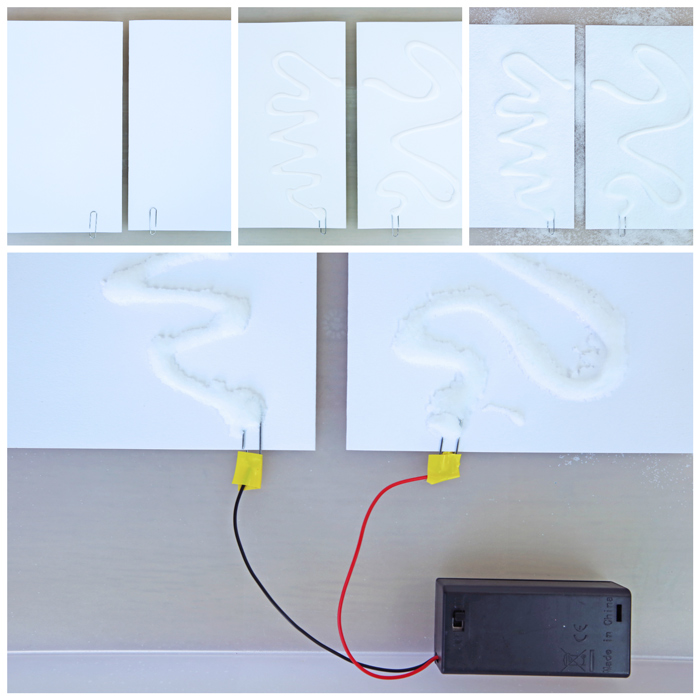
- Step 1Fold each sheet of paper in half and place a paper clip at the lesser. Place the sheets of newspaper side by side to each other on a tray.
- Step two"Draw" a line using glue from the paper clip up the paper and so towards the edge. Be generous with the gum.
- Pace 3Sprinkle a proficient layer of salt on the glue. Lift the newspaper and dump the actress salt on the tray. Tilt the tray to motion the table salt to the side.
- Step ivTake the exposed carmine wire from the battery pack and wrap it around one of the paper clips. Secure in place with electric record. Make sure the wire and paper clip brand good contact.
- Pace fiveRepeat with the black wire, attaching it to the other paper clip and securing the connection with electric tape.
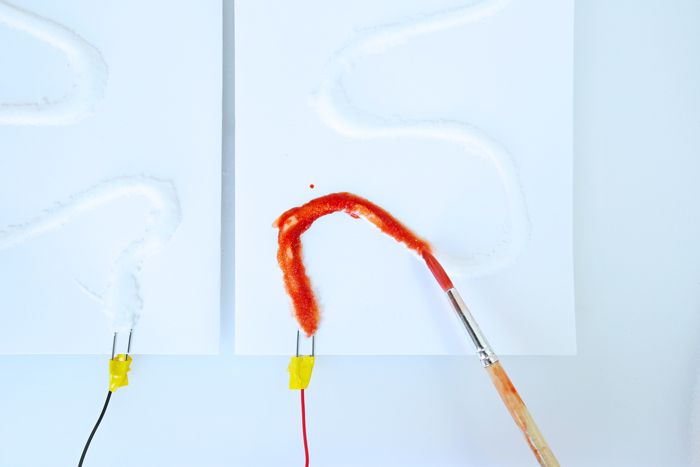
- Footstep 6Add watercolors to the salty gum lines using a pipette or the tip of a paintbrush. It volition flow along the salt and glue drawing.
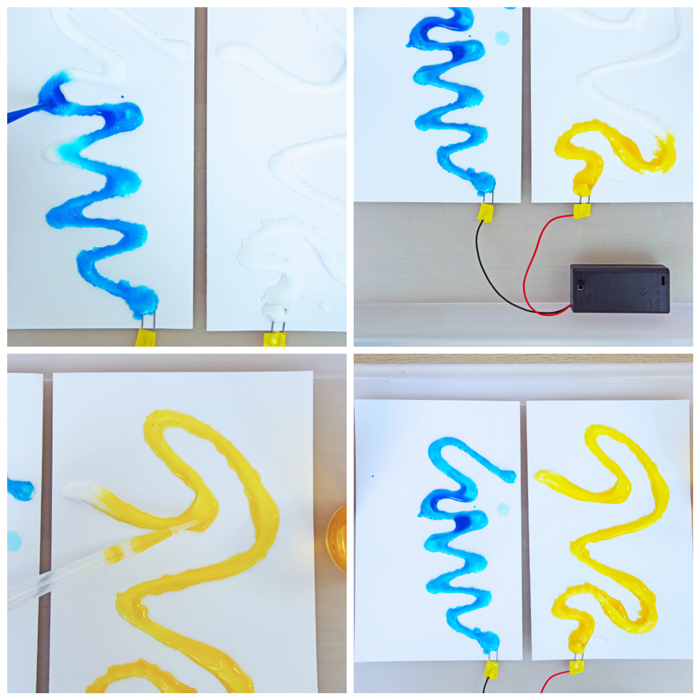
Turn it into a excursion:
- Step 1Curve the legs of the LED out.
- Pace twoAffect the long leg (positive side) of the LED to the glue/salt line attached to the red wire.
- Step iiiBear upon the other leg to the glue/salt line attached to the black wire. It should light upwardly!
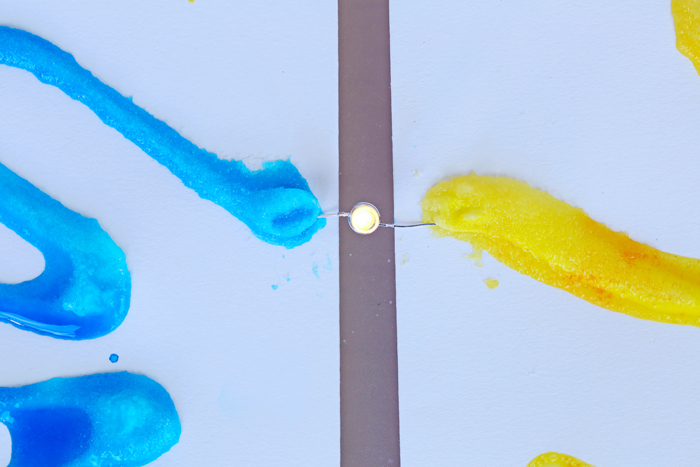
Hint: The light coming from the LED will exist fainter than when fastened directly to the bombardment pack wires.
Tips
- This works best when the common salt is moist and wet.
- It's a good idea to test your LED before making the excursion. Hold the long leg (positive side) of the LED to the exposed cease of the cherry-red wire coming out of the bombardment pack. Hold the other LED leg to the exposed end of the black wire. The LED should light up.
Let'southward Talk STEAM
The Science: Electricity is the menstruation of electrical power from a source (a bombardment) to something that needs power (a motor or a low-cal). The flow of electricity is called a electric current and in a DC excursion information technology flows in i direction. That'south why information technology'southward important that the positive end of the LED is connected to the positive (red) wire.
The Technology: Many different materials can carry an electric current. The near common one is metal. Salt and water are also proficient electrical conductors and can acquit a electric current.
The Art: Many artists use lines to draw shapes and create space. In this projection we are using glue to draw lines. They are hard to see because the glue is white and then is the newspaper. When you add paint on pinnacle of the lines they "pop" out and tin exist seen.
Extension ideas for your simple excursion project
- Playdough and table salt dough are made using a lot of salt which makes them practiced electrical conductors. Try connecting your battery pack to two balls of salt dough and placing the LED between them. Does it light up?
- What other metals can you recall of that might conduct electricity? Consider wire, pipe cleaners, copper record, nails and more than. Connect your battery pack leads to these materials and see if they can conduct electricity!
- Try making a graphite excursion! That's correct, pencil pb can acquit electricity! See this postal service for how to practice it.
Salty Circuits in the Classroom
How to do this simple circuit project in a group setting
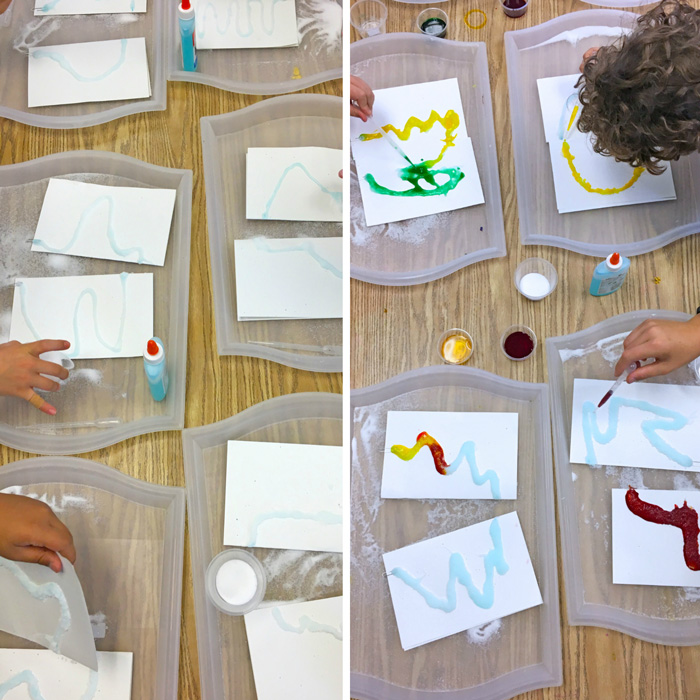
We did this projection at Camp STEAM last yr and the children loved it! The caveat being that half of the circuits did not work. This project does require a off-white amount of supervision for the final circuit to work successfully. The biggest hurdles we saw were with elaborate glue designs that were difficult and/or impossible for electricity to flow through.
The flip side of this issue of non-working circuits is a existent understanding of why and how electricity flows. We used the different success rates as a talking point to illustrate why some of the circuits worked well (usually the very unproblematic and direct designs) and why others would not power a light (the designs overlapped or the h2o flowed effectually the designs so much that the circuit could not be completed.)
Instructor Prep
- Fold menu stock in half and add a newspaper prune to the bottom of each folded sheet. Each educatee will demand two folded sheets.
- Assemble trays, ane per student if available. Alternatively students may use a box lid or any box with sides that tin can contain the common salt.
- Make the watercolors and place in pocket-size jars or cups. Vey footling paint is needed.
Create the circuits
- Pace 1 Starting time by request students to "describe "a blueprint using gum on each of the 2 halves of card stock. The designs should start at the paper clip and stop towards the folded edge on the upper half of each newspaper. Emphasize that the more elaborate the design the more difficulty the electrons may accept following the circuit.
- Step 2 Once the glue designs are complete, students should sprinkle salt over the drawings, then gently tilt the paper onto the tray to remove backlog table salt.
- Step 3 Students should use pipettes to add color to their glue designs.
Test the circuits
In gild to go along expenses in cheque nosotros had the students bring usa their completed designs on the tray and nosotros tested out their circuits to encounter if they worked. This allowed us to utilize only one battery pack and one LED per instructor.
- Pace 1In lieu of taping the wires to the paper clips, the teacher should use alligator clips to connect the battery pack to each of the paper clip leads on the educatee slice.
- Pace 2 Students should identify the LED legs in the correct direction on each side of their excursion to test it.
- Step 3 Does the LED light up? If not, enquire the student tin locate where the electrons may finish flowing.Tip: You tin can clip alligator clips to the LED legs and test out various places forth the excursion to see if the electricity is flowing by dipping the open ends of the alligator clips in the common salt/glue/h2o circuit.
Salty Circuits would be a fun science fair projection! For more Science Fair Ideas bank check out this list
Want more STEAM?
If yous'd like to see more projects from my book hop over here.
Yous can also follow along on Instagram using the #steamplayandlearn. If y'all try any posts from the volume be certain to tag them #steamplayandlearn!
Are y'all passionate about raising creative kids?
Bring together over 22,179 parents and educators who want connect with kids and nurture their artistic process through magical, easy projects yous tin can do TOGETHER.
Subscribe to our email listing to receive project ideas as well as offers for some our artistic products.
If yous desire to read our privacy policy before subscribing, hop over here.
christopherting1950.blogspot.com
Source: https://babbledabbledo.com/how-to-make-salty-circuits-a-simple-circuit-project-for-kids/
0 Response to "How to Use Alligator Clips by Artc in Art"
Post a Comment